
For Senator Seriake Dickson, the political journey that brought Governor Douye Diri to power was more than an ordinary exercise in party politics. It was, in his account, a personal investment built on trust, sacrifice, fairness and a determination to give every part of Bayelsa State a sense of belonging.
But years after that political journey, Dickson believes the victory he fought so hard to secure has been handed over to the very political opposition he defeated repeatedly.
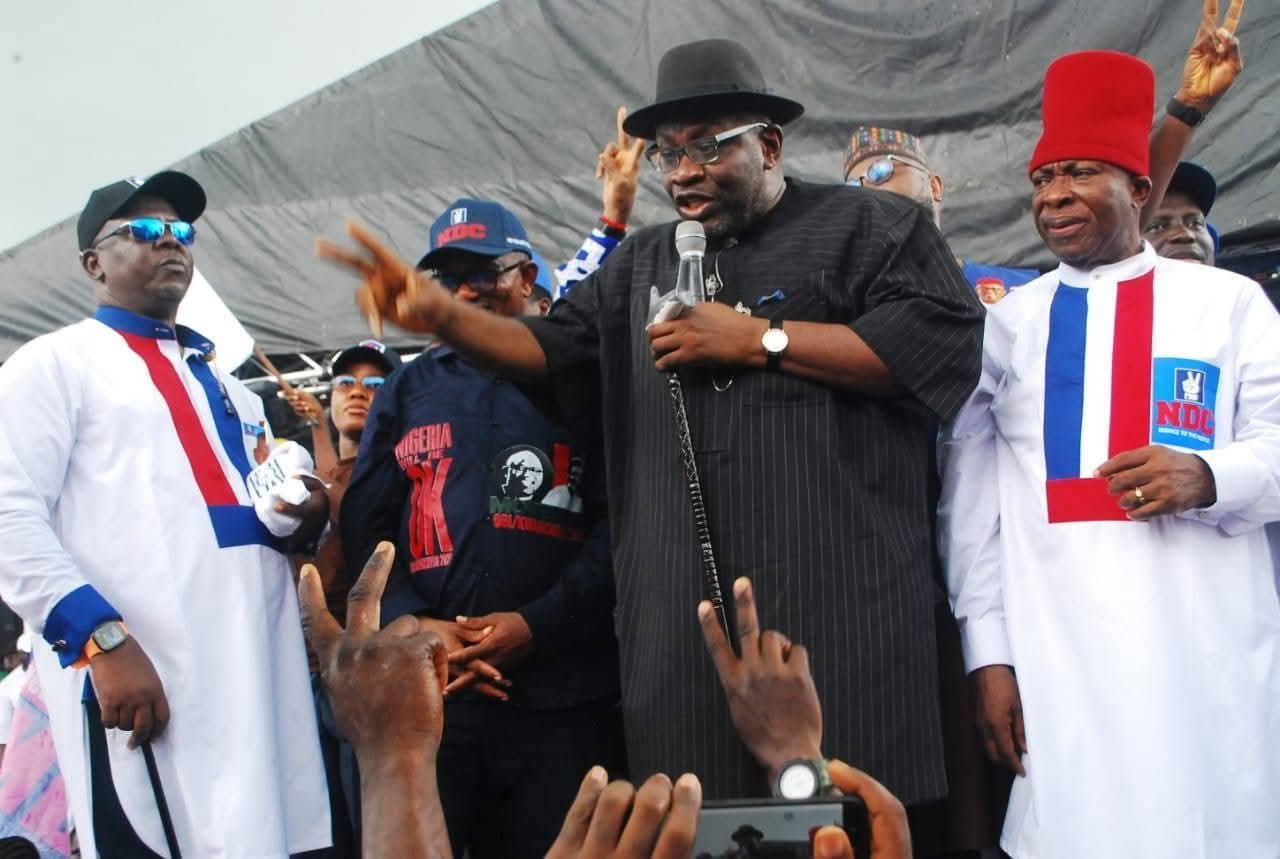
Standing before party supporters in Yenagoa on Friday, the former Bayelsa State governor revisited the events that led to Diri’s emergence as governor, recalling how he personally supported his political rise, funded his political ambitions and persuaded party stakeholders to give him opportunities.
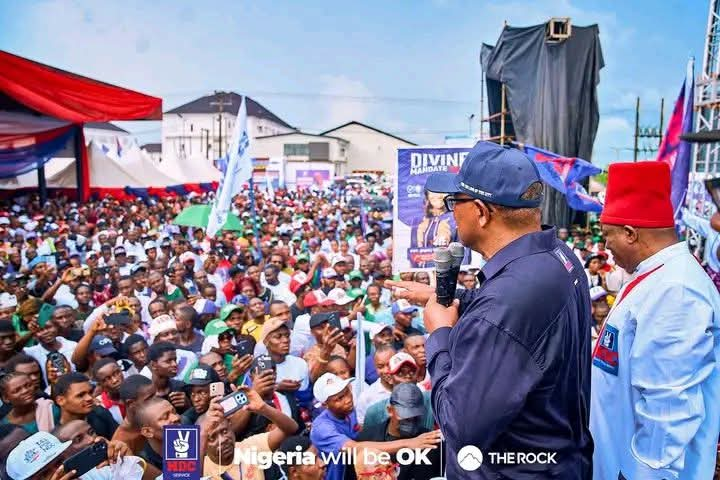
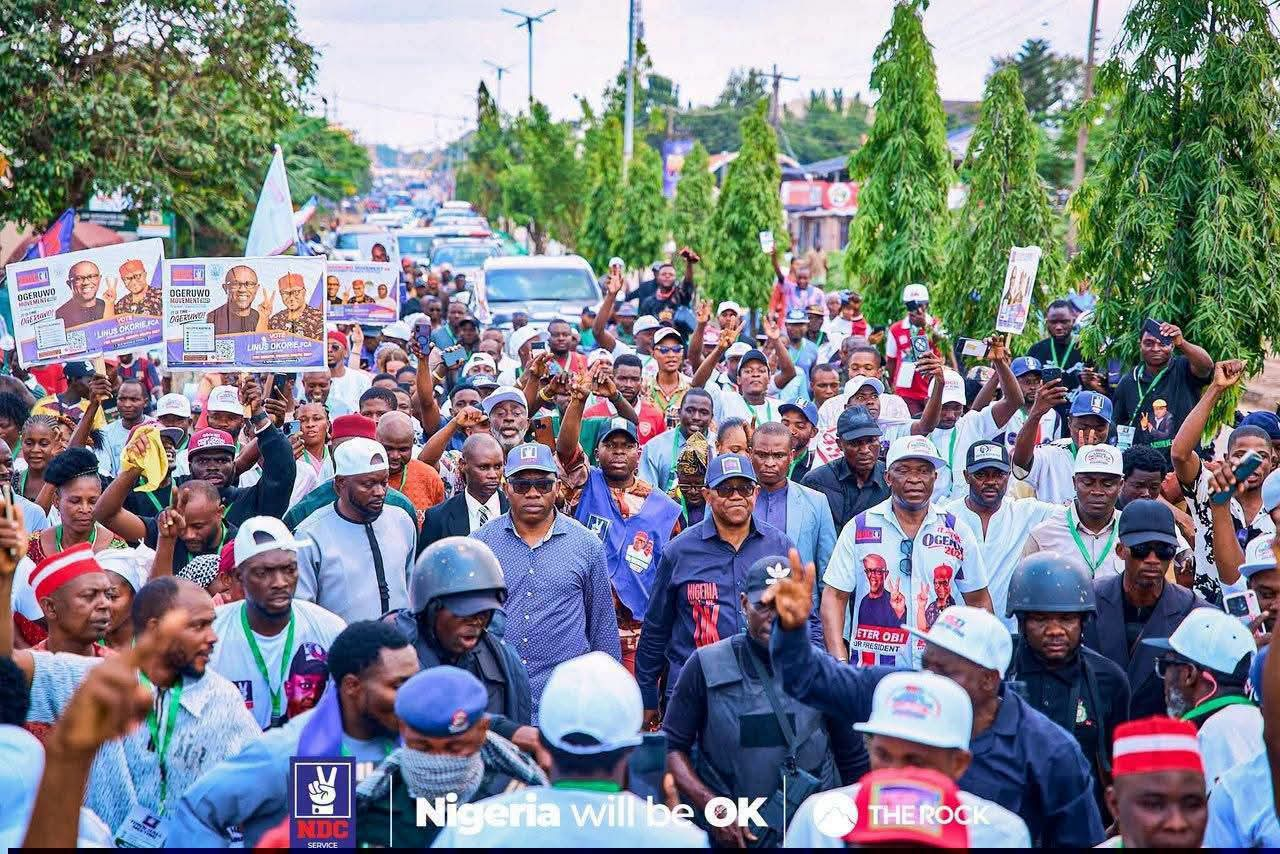
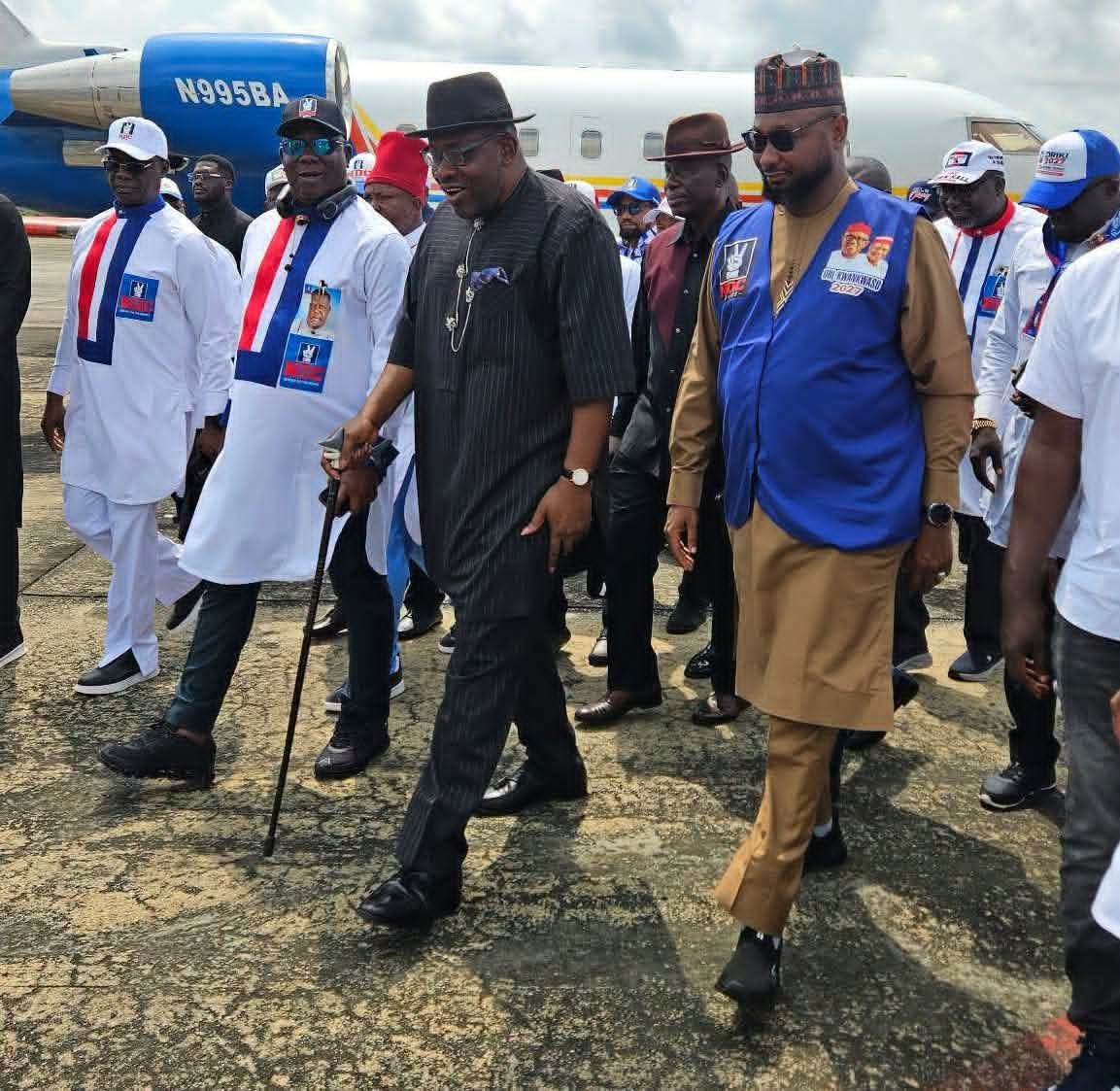
His speech, delivered during his homecoming as National Leader of the Nigeria Democratic Congress (NDC) and the commissioning of the party’s state secretariat, carried a mixture of disappointment, political grievance and a call for renewed political mobilisation ahead of the 2027 general election.
Dickson did not merely speak about political differences. He took his audience back to the beginning of a relationship he said was built on loyalty and shared political interests.
According to him, Diri had served as his Principal Executive Secretary before he appointed him Deputy Chief of Staff and subsequently supported his journey to the House of Representatives and later the Senate.
He alleged that Diri did not personally spend money on those political journeys, insisting that he provided the financial resources needed to secure the positions.
“He was my Principal Executive Secretary. I appointed him Deputy Chief of Staff. I now sent him to House of Reps. One naira he didn’t spend. I funded everything. I gave him Senate again. One naira he didn’t spend,” Dickson told the gathering.
He recalled how he later invited Diri to contest the governorship, explaining that his decision was partly influenced by the need to promote fairness and political balance in the state.
Dickson said he believed it was time for another political bloc to produce a governor, rather than allowing the same areas to continue dominating the state’s leadership.
He explained that although concerns were raised about the population of Diri’s political area, he insisted that equity should not be determined solely by population.
“I want fairness. Your place has not had the governor. They say your population is small. But I believe in fairness. Isaac Boro came from there. A lot of leaders came from there. There must be equity in this place,” he said.
The former governor also recalled providing financial support for Diri’s governorship campaign, including money for the purchase of nomination forms, printing, posters, billboards and other campaign materials.
He said he appealed to party leaders and stakeholders to support the arrangement because he wanted someone who would understand the people, protect their interests and defend the collective political aspirations of the Ijaw nation.
Dickson further recalled the political consultations involving him and former President Goodluck Jonathan over the zoning and distribution of political opportunities in the state.
He said they had agreed that, following the emergence of the first governor from Southern Ijaw, Chief Diepreye Alamieyeseigha, it would be unfair to return the governorship to the same area when political power was due for another rotation.
According to him, Yenagoa or Ogbia was considered as an alternative, while Diri was offered another opportunity through the Senate.
He reminded supporters of the political battles he fought to secure the arrangement, stressing that fairness and the need for an inclusive political structure were central to his decision.
However, the former governor expressed disappointment over what he described as the transfer of their political victory to the All Progressives Congress (APC).
He accused those who took over the political structure of surrendering a victory that, according to him, had been hard-won through years of political struggle.
“Now the APC that I defeated here three times back to back, they dashed our hard-won victory free of charge to the APC. Are you happy with that?” he asked.
The question drew attention to the deepening political divisions in Bayelsa and the contest over the political future of the state.
Dickson, who represented Bayelsa West in the Senate after leaving office as governor, also called on the Ijaw people to resist what he described as political domination.
“This Ijaw nation has not been conquered by anybody. Will you allow us to be conquered in your lifetime?” he asked.
He urged party members to return to their communities, engage residents and explain the NDC’s political agenda, promising to join the mobilisation efforts.
For Dickson, the task ahead goes beyond establishing party structures. It is about rebuilding political support, strengthening the party and persuading Nigerians that the NDC can provide an alternative leadership in 2027.
Obi promises a different Nigeria
While Dickson focused on political loyalty, fairness and the future of the Ijaw political movement, the NDC presidential candidate, Mr Peter Obi, used the occasion to present his vision for a different Nigeria.
Obi accused President Bola Ahmed Tinubu of lacking the energy and capacity required to govern the country effectively, arguing that Nigerians needed a leader who could devote sufficient attention to the country’s economic and security challenges.
He said the 2027 election presented an opportunity for Nigerians to change the direction of the country by voting out the APC administration, which he blamed for worsening poverty, hunger and hardship.
The former Anambra State governor painted a picture of a country where ordinary citizens were struggling to meet their most basic needs.
“Today we have a country that produces the highest number of poor people in the world. Today we have a country where our people are hungry. Nigerians don’t know where the next meal will come from anymore,” he said.
He expressed concern that access to healthcare had become difficult for many Nigerians, noting that some citizens were increasingly turning to religious institutions for help because they could not afford or access proper medical services.
“In Nigeria today, if you are sick, instead of going to hospital, you go to church because there’s no hospital, so you can only pray for God to save you,” Obi said.
He also highlighted the challenges facing young people, particularly unemployment and inadequate educational opportunities.
According to him, Nigeria must move beyond an economy that depends heavily on consumption and imports to one that creates wealth through local production, industrial development and employment.
“What do we want to do? We are telling you that NDC is coming to build a new Nigeria that is possible. We want to move Nigeria from consumption to production,” he declared.
Obi said national unity would form the foundation of his administration, promising that citizens from the South-South and other parts of the country would feel included in national affairs.
He maintained that no part of Nigeria should feel abandoned or treated as less important because of its geographical location or ethnic identity.
On security, he expressed concern over kidnapping and the growing fear associated with travelling on Nigerian roads.
Obi recalled travelling by road from Enugu through several states, including Kogi, Nasarawa and Ebonyi, before arriving in Bayelsa.
He argued that Nigerians should be able to travel freely without the fear of being kidnapped or attacked.
“We will secure Nigeria. Nobody will live in Nigeria where you can’t travel on the road again,” he said.
He further pledged that an NDC administration would take decisive action against kidnappers, particularly those targeting schoolchildren.
“If anybody takes school children, if anybody kidnaps anybody, I will go into the bush. We go into that bush and rescue the person. Nobody will try that in our government,” he declared.
The NDC presidential candidate also questioned the Federal Government’s borrowing, claiming that the Tinubu administration had borrowed nearly $100 billion and demanding an explanation of how the funds had been utilized
He criticized what he described as the President’s frequent foreign travels, arguing that more attention should be given to domestic challenges and engagement with Nigerians.
Obi also promised to fight corruption, ensure accountability in public spending and work with state governments to provide free primary education.
On electricity, he pledged that his administration would work towards producing, transmitting and distributing at least 10,000 megawatts of power, compared with the approximately 4,000 megawatts he cited as the current minimum under the APC government.
A political battle ahead
Earlier, Dickson had urged Nigerians to take responsibility for the future of the country by participating in the 2027 general election and protecting their votes.
He said the NDC was prepared to offer the country the leadership required to address its challenges, calling on supporters to take the party’s message beyond the gathering in Yenagoa.
The commissioning of the state secretariat and Dickson’s homecoming therefore served as more than a party celebration. It provided an opportunity for the NDC leadership to articulate its political ambitions, mobilise supporters and position the party ahead of the next general election.
While Obi presented a national vision centred on production, security, education, electricity and accountability, Dickson’s speech brought the contest closer to home, reopening questions about political loyalty, equity, trust and the future of leadership in Bayelsa.
With the 2027 elections approaching, both leaders called on Nigerians to embrace the NDC as an alternative to the APC.
For the party, the challenge now is to turn its promises and political grievances into a convincing campaign capable of winning the confidence and votes of Nigerians.


