
 By Our Reporter
The launch of a dedicated health insurance scheme for journalists in Nigeria’s capital has been described as a landmark intervention aimed at addressing the long-standing welfare challenges confronting media professionals.
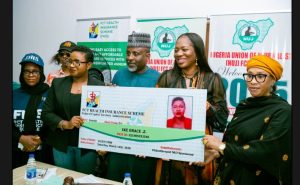
Chairman of the Nigeria Union of Journalists (NUJ) FCT Council, Grace Ike, revealed that more than 65 per cent of journalists working in the Federal Capital Territory have already been enrolled in the scheme, marking a significant step toward improving the health security of practitioners in the media industry.
According to Ike, the initiative represents the first structured health insurance programme specifically designed for journalists operating within the FCT. She noted that the programme seeks to address the long-standing neglect of journalists’ welfare, particularly in the area of healthcare access.
“Journalists dedicate their lives to informing the public and shaping national conversations, yet their welfare is often overlooked. This initiative is about protecting those who work tirelessly to keep society informed,” she said.
The programme was unveiled during the NUJ FCT Congress, which drew more than 450 journalists from across the territory. The event also served as a platform for stakeholders to discuss the importance of improved healthcare protection for media professionals who often work under demanding and risky conditions.
Speaking at the event, the Mandate Secretary of the FCT Health Services and Environment Secretariat, Adedolapo Fasawe, called on political leaders, philanthropists, business executives and religious institutions to support journalists by sponsoring health insurance coverage for them.
Fasawe stressed that journalists play a vital role in strengthening democracy by amplifying the voices of citizens and holding institutions accountable. Despite their critical contributions, she said many media professionals remain without access to basic healthcare protection.
“My purpose of coming here today is to ask political office holders, religious leaders and individuals who want their voices to be heard to buy health insurance for a journalist,” she said.
She commended the Chairman of the House of Representatives Committee on Information, Akin Rotimi Jr., for his support in helping to initiate the insurance coverage programme for journalists in the territory.
Fasawe also announced that she had personally facilitated 150 free health insurance slots for members of the NUJ in the FCT, a gesture that significantly boosted the programme’s reach. In addition, the Permanent Secretary in the FCT Health Secretariat, Babagana Adam, pledged to sponsor 50 journalists in memory of his late brother.
During the event, Fasawe further announced an additional 50 insurance slots, bringing the total coverage to approximately 480 journalists out of an estimated 800 practising in the FCT. The development means that roughly 65 per cent of journalists in the territory are now captured under the scheme.
The Mandate Secretary explained that expanding health insurance coverage aligns with broader healthcare reforms being implemented by the FCT Administration under the leadership of the Minister of the FCT, Nyesom Wike.
She noted that the administration has introduced several initiatives aimed at strengthening healthcare delivery, including a zero-tolerance policy toward maternal mortality and the expansion of free antenatal and delivery services for vulnerable pregnant women across primary healthcare centres in the capital.
Also speaking at the event, President of the Nigeria Union of Journalists, Alhassan Yahya, described the scheme as a critical intervention in a sector where health insurance coverage remains extremely low.
According to Yahya, available studies indicate that less than one per cent of journalists across Nigeria currently have any form of health insurance, leaving many exposed to high out-of-pocket medical expenses in times of illness or emergencies.
He expressed optimism that the FCT initiative could serve as a model for other NUJ councils across the country, encouraging them to prioritise the welfare and wellbeing of journalists.
For many journalists who attended the congress, the programme represents more than just a healthcare intervention—it signals a renewed commitment to improving the professional and social security of media practitioners.
Stakeholders at the event expressed hope that continued support from government agencies, private organisations and philanthropic individuals would help extend the scheme to cover all journalists working in the Federal Capital Territory.
They agreed that ensuring journalists have access to reliable healthcare protection is essential, not only for their wellbeing but also for sustaining a vibrant and responsible media sector in Nigeria.