

 By Amara Agha, Abakaliki
The Minister of Works, David Umahi, Friday reaffirmed the Federal Government’s commitment to rebuilding critical road infrastructure across the Southeast as part of efforts to boost economic growth and regional connectivity.
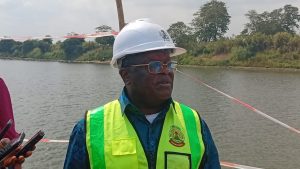
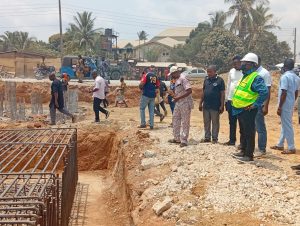
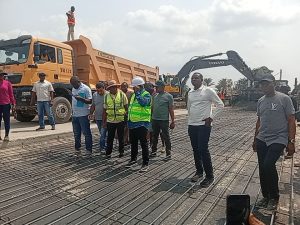
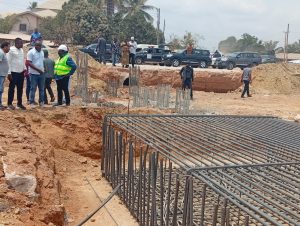
Umahi made the remarks during an inspection of ongoing Federal Government road projects in Ebonyi State, where he assessed the progress of strategic highways linking communities in the Southeast and South-South regions.
He said the projects are part of the broader infrastructure agenda of President Bola Ahmed Tinubu, aimed at rebuilding Nigeria’s major transport corridors with durable concrete roads.
According to the minister, one of the projects under construction will eventually connect with the Lagos–Calabar Coastal Highway, creating a continuous route that will significantly improve transportation and economic activities along the southern corridor.
Umahi explained that the first section of the project covers about 125.5 kilometres with a contract value of approximately ₦454 billion, noting that 30 percent of the funding has already been released by the Federal Government.
He said the road begins from Calabar and passes through Ndibe Beach, Afikpo, Amasiri and Onueke, before linking to other national highways that will eventually connect to Abuja.
The minister described the highway as a strategic corridor designed to link agricultural communities, fishing settlements and emerging industrial zones across the region.
During the inspection tour, Umahi also reviewed progress on a 1.5-kilometre bridge made up of about 30 spans, each measuring roughly 30 metres.
He explained that the bridge will be constructed using a sophisticated launching system where cranes move from pier to pier, lifting beams directly into position above the structure.
When completed, he said, the bridge will provide a safer transportation route for riverine communities that currently rely on water crossings.
Umahi commended indigenous contractors handling sections of the project, noting that many of them have continued work despite delays in mobilization payments.
He said their performance demonstrates that Nigerian construction firms have the technical capacity to deliver large-scale infrastructure projects.
The minister also announced the planned launch of the President Tinubu Engineering Mentorship Programme, which will train young Nigerian engineers through practical experience on major construction sites.
Under the initiative, engineering graduates and technical trainees from the 36 states and the Federal Capital Territory will be attached to ongoing infrastructure projects for hands-on training.
Umahi said they government has adopted reinforced concrete pavement for most of its highways because the material is more durable and can last up to 100 years with minimal maintenance.