
By Eunice Nnachi
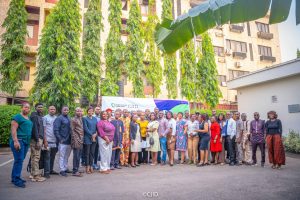 Abuja – The Centre for Journalism Innovation and Development (CJID) has successfully concluded a two-day capacity-building training for 37 journalists from Abuja, Bayelsa, and Benue states, aimed at strengthening reporting on public safety and conflict. The programme took place at Bon Hotel Imperial, Abuja, Federal Capital Territory.
Speaking at the opening, CJID Executive Director Akintunde Babatunde noted that while many journalists aspire to ask critical questions, power dynamics, fear, and newsroom pressures often prevent those questions from being asked or published. He emphasised that CJID seeks to see a tangible shift in how conflict and public safety issues are reported following the training.
“We hope that by the end of this training, participants will not only be equipped with the tools required for people-centred conflict reporting, but will also have the drive to produce journalism that meaningfully shapes public understanding, strengthens accountability, and influences policy outcomes,” Babatunde said.
Community policing emerged as a central focus, particularly under the 2020 Nigeria Police Act. Journalists explored the historical and structural foundations of policing in Nigeria, including its colonial roots and continued elite orientation.
Discussions also highlighted how gaps in policing capacity, accountability, and training have contributed to the rise of community-driven safety mechanisms across different regions.
Facilitators encouraged participants to prioritise rigorous fact-finding, avoid borrowed or sensational language, and challenge dominant stereotypes. Reporting grounded in lived realities, community relationships, and historical context was emphasised over fear-based narratives.
Journalists were introduced to emerging national patterns of violence, including geographic diffusion, recurrence driven by delayed or absent state responses, security vacuums, and retaliation cycles—dynamics often overlooked in headline-driven coverage. Beyond documenting violence, participants were encouraged to highlight peacebuilders, community resilience, coping mechanisms, and reform efforts while acknowledging insecurity realities.
During a session on positioning public safety reporting for policy influence, Ifeanyi Chukwudi, PMP, noted that conflict reporting must go beyond exposure and headlines. The true measure of impact, he explained, is whether journalism contributes to safer communities, influences policy, and helps save lives.
Other sessions focused on impact storytelling and solutions-focused reporting. Hauwa Nuhu emphasised centring vulnerable groups, saying that without their stories, meaningful solutions remain out of sight. On the second day, Olive Aniunoh encouraged journalists to go beyond statistics, identify patterns, and tell human-centred stories.
Nuhu stressed amplifying marginalised voices, while sessions also addressed hunger and vulnerability, the influence of false narratives, and the power of verified, contextualised data in shaping public understanding and action.