
Nigeria’s ongoing battle against terrorism recorded a significant development on Christmas Day as coordinated security cooperation between the Federal Republic of Nigeria and the United States resulted in precision airstrikes against terrorist targets in the North West region of the country.
In an official press release issued on Friday, December 26, 2025, the Ministry of Foreign Affairs, Abuja, confirmed that Nigerian authorities, working within established bilateral frameworks, partnered with the United States in intelligence collaboration and strategic coordination that led to successful hits on terrorist locations. The operation, according to the ministry, forms part of a broader, structured effort to confront the persistent threat of terrorism and violent extremism facing Nigeria.
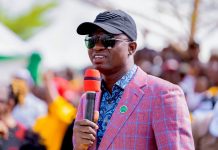
The press release, signed by the ministry’s spokesperson, Kimiebi Imomotimi Ebienfa, emphasized that the cooperation aligns with international law and global best practices, while fully respecting Nigeria’s sovereignty. It noted that the partnership involves intelligence sharing, operational coordination, and other support mechanisms designed to degrade terrorist capabilities and protect civilians.
Reports indicate that the airstrikes, carried out on Christmas Day, targeted elements of the Islamic State West Africa Province (ISWAP) operating in parts of Sokoto State. The timing of the operation drew global attention after United States President Donald Trump publicly confirmed the strikes, describing them as a response to attacks allegedly directed at Christian communities in the region.
While acknowledging the concerns raised by such targeted violence, the Nigerian government was careful to stress that terrorism in any form remains unacceptable, regardless of the faith, ethnicity, or identity of its victims. “Terrorist violence whether directed at Christians, Muslims, or other communities remains an affront to Nigeria’s values and to international peace and security,” the Ministry of Foreign Affairs stated.
Nigeria has for more than a decade grappled with insurgency and terrorist violence, particularly from Boko Haram and its splinter faction, ISWAP. What began primarily in the North East has, in recent years, expanded into parts of the North West, where banditry, kidnapping, and extremist activities have increasingly overlapped, compounding the nation’s security challenges.
Security analysts say the reported strikes in Sokoto reflect growing concern about ISWAP’s attempts to expand its operational footprint beyond its traditional strongholds around the Lake Chad Basin. The group has sought to exploit local grievances, porous borders, and criminal networks to sustain its activities, making intelligence-driven operations increasingly critical.
The Ministry of Foreign Affairs reiterated that Nigeria’s counter-terrorism approach places the protection of civilian lives at its core. According to the statement, all actions undertaken by Nigerian authorities and their partners are guided by the need to safeguard national unity, uphold human rights, and preserve the dignity of all citizens.
This assurance comes amid longstanding public sensitivity around military operations, particularly airstrikes, due to the risk of civilian casualties. Nigerian officials have consistently maintained that improved intelligence, precision targeting, and international collaboration have significantly reduced such risks in recent operations.
Sources familiar with the cooperation revealed that the United States has been conducting intelligence, surveillance, and reconnaissance flights over parts of Nigeria since late November. These missions reportedly enhanced situational awareness and contributed to identifying high-value terrorist targets, leading to the Christmas Day operation.
The Federal Government views such cooperation as complementary to its own security efforts rather than a replacement. The Ministry of Foreign Affairs stressed that Nigeria continues to strengthen its domestic security institutions, intelligence capabilities, and military professionalism to ensure long-term stability and self-reliance.
“The Federal Government continues to work closely with its partners through established diplomatic and security channels to weaken terrorist networks, disrupt their financing and logistics, and prevent cross-border threats,” the statement said. It added that building resilient national security structures remains a top priority.
International partners have repeatedly expressed concern over the regional implications of terrorism in Nigeria, noting that instability in Africa’s most populous nation has ripple effects across West and Central Africa. Terrorist groups operating in Nigeria have been linked to transnational crime, arms trafficking, and extremist networks spanning several countries.
By reaffirming its collaboration with the United States, Nigeria signaled its commitment to collective security efforts while maintaining control over its internal affairs. Diplomats note that such transparency is intended to reassure citizens and the international community that counter-terrorism actions are conducted responsibly and within legal frameworks.
Public reaction to the news has been mixed. Some Nigerians have welcomed the strikes as a necessary show of force against groups that have inflicted widespread suffering on communities. Others have called for sustained attention to root causes of insecurity, including poverty, unemployment, and governance challenges, warning that military action alone cannot deliver lasting peace.
The Ministry of Foreign Affairs acknowledged these broader concerns, underscoring that security operations are only one component of the government’s strategy. Ongoing efforts in economic development, social cohesion, and regional cooperation are also considered essential to addressing the drivers of extremism.
As Nigeria continues to confront evolving security threats, the government pledged to keep citizens informed through appropriate official channels. “The Ministry of Foreign Affairs will continue to engage relevant partners and keep the public informed,” the statement concluded.
The Christmas Day operation stands as a notable moment in Nigeria–United States security relations, highlighting how intelligence collaboration and diplomatic coordination are being leveraged to confront terrorism. Whether it marks a turning point in curbing ISWAP’s activities in the North West will depend on sustained pressure, effective governance, and continued protection of civilian lives in the months ahead.