
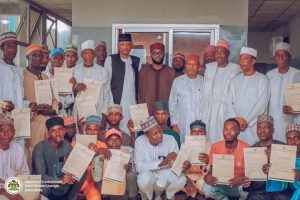
Kano State played host to a two-day high-level workshop on the validation of Nigeria’s Green Climate Fund (GCF) No-Objection Procedure, bringing together representatives of the National Council on Climate Change (NCCC), the Nigeria Incentive-Based Risk Sharing System for Agricultural Lending (NIRSAL), development partners, and other key stakeholders.
The workshop, held in Kano, forms part of ongoing efforts to strengthen Nigeria’s capacity to access and effectively utilise international climate finance. Speaking during the engagement, the Kano State Commissioner for Environment and Climate Change, Dr. Dahir M. Hashim, described the event as timely for the state’s climate ambitions.
Dr. Hashim revealed that with technical support from the PACE Programme under the UK’s Foreign, Commonwealth and Development Office (FCDO), Kano State has completed a comprehensive Climate Finance Readiness Assessment. The assessment, conducted using the PACE Assessment Tool, evaluated institutional strengths and identified key gaps that could hinder access to global climate finance mechanisms such as the GCF.
“As part of implementing the Kano State Climate Change Policy, we have established a State Platform on Climate Finance,” the commissioner said. “This platform is already enhancing coordination among Ministries, Departments and Agencies, ensuring alignment of our climate priorities with national frameworks, and supporting the development of bankable climate-relevant projects.”
He noted that improving access to climate finance is central to building a climate-resilient future for Kano State, particularly in view of the region’s vulnerability to desertification, flooding, and other climate-related pressures.
Dr. Hashim reaffirmed the state government’s commitment to meeting all requirements for GCF access and strengthening collaboration with the NCCC, NIRSAL, and development partners. According to him, such partnerships are essential in advancing sustainable development and ensuring communities benefit from interventions that mitigate and adapt to climate change.
The validation workshop is expected to contribute significantly to refining Nigeria’s GCF No-Objection Procedure, a key step that enables state and non-state actors to submit climate projects for approval through designated national authorities.