
 When the late former governor of Bayelsa State, Diepreye Alamieyeseigha, made international headlines for his corruption case in the early 2000s, few imagined that two decades later, part of his looted wealth would return to the state and spark new debates on accountability, health, and governance.
Today, $954,807.40—repatriated from the United States—is earmarked for upgrading eight primary healthcare centres, one in each of Bayelsa’s local government areas. But as history has shown, asset recovery is not just about getting stolen funds back—it is about ensuring those funds are not lost again through mismanagement, corruption, or neglect.
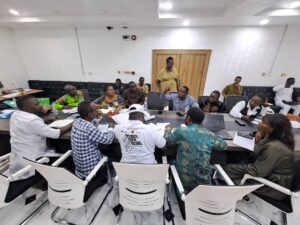
It is this reality that brought together over 50 participants from civil society, government, and the media at the Don Cont Hotel in Yenagoa, Bayelsa State, on September 25–26, 2025, for a two-day capacity building workshop on asset recovery and monitoring.
Organised by the Africa Network for Environment and Economic Justice (ANEEJ), with support from the UK’s Foreign, Commonwealth & Development Office (FCDO), the workshop marked a turning point for the Bayelsa NGOs Forum (BANGOF)—a coalition of civil society organisations now tasked with driving advocacy and monitoring of the recovered Alamieyeseigha asset.
The Context: Why Asset Recovery Matters
Rev. David Ugolor, Executive Director of ANEEJ, set the tone with a sobering reminder:
“Illicit financial flows remain one of the greatest threats to Nigeria’s socio-economic development. Every year, billions of dollars leave our shores through corruption, money laundering, and tax evasion. These are funds that could have built schools, hospitals, and infrastructure.”
According to the African Union, Africa loses about $150 billion annually to illicit financial flows, with Nigeria alone responsible for nearly 20 percent of that figure. Between 2001 and 2010, the country reportedly lost $40 billion.
But there is a silver lining. In recent years, stronger collaboration between international governments and Nigeria, backed by conventions such as the United Nations Convention Against Corruption (UNCAC) and agreements from global forums like the London Anti-Corruption Summit, has led to the recovery of stolen assets.
Bayelsa’s share of this global effort—the Alamieyeseigha loot—offers both hope and a test. Will the funds be transparently used to strengthen health systems? Or will they fall into the same cycle of mismanagement that plagued their origin?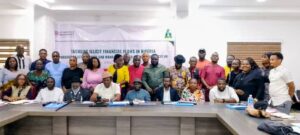
BANGOF’s Crucial Role
One of the strongest messages from the workshop was that civil society must step up as watchdogs.
Rev. Ugolor emphasised:
“BANGOF must be a rallying point, not a fragmented voice. Your role is to monitor, not to implement. If you try to do both, there will be conflict of interest. Focus on holding government accountable while building the capacity of your members.”
The workshop revealed troubling gaps. Many NGOs and community-based organisations (CBOs) had little understanding of the procurement and bidding processes tied to the health centre projects. Some who applied to participate in the projects had been working in silos, with little coordination.
By the end of the two days, resolutions were made to reposition BANGOF as a coordinating hub for Bayelsa CSOs. These included:
Selecting 5–10 NGOs for training on regulatory compliance and Bureau of Public Procurement (BPP) standards.
Developing selection criteria for the training.
Regularly inviting regulatory agencies to engage BANGOF members.
Simplifying complex CSO laws for easier understanding.
Sharing updates on the bidding and project implementation process.
Mobilising communities to independently monitor projects.
Conducting a survey of all eight health centres, documenting their condition through photos, videos, and community feedback.
The data, participants agreed, would not only serve as a baseline for monitoring but also as an advocacy tool to pressure both Nigerian and US authorities for timely disbursement of funds.
Voices from the Workshop
The workshop was not short of powerful voices urging unity and action.
High Chief Nengi James, a prominent traditional leader, pledged to mobilise rural chiefs for advocacy and even cover transport and accommodation costs for ANEEJ staff coming to support BANGOF.
“Traditional rulers are gatekeepers. If we are carried along, the communities will own these projects, protect them, and demand accountability,” he said.
Dr. Inebraton Preye, from the Bayelsa Ministry of Health, moved a motion that went beyond the recovered funds. He called on the state government to allocate ₦1 billion in matching funds through the budget to scale up health facility upgrades. His proposal, supported by High Chief Nengi, underscored the workshop’s ambition to not just monitor but also influence policy.
Meanwhile, participants put their money where their mouth was. They agreed to contribute a portion of their transport refunds to fund initial advocacy work. ANEEJ staff pledged 20%, participants 10%, while some leaders volunteered 50%.
It was a rare show of solidarity in a sector often criticised for chasing donor funds without building internal commitment.—
The Challenges Ahead
Yet, challenges remain.
Civil society in Bayelsa, like elsewhere in Nigeria, faces regulatory hurdles. Many NGOs are still not compliant with government requirements for operation or with procurement standards needed to engage in public projects. This leaves them vulnerable to exclusion or marginalization.
There is also the risk of internal division. With different NGOs competing for limited recognition and resources, coordination has often been difficult. The workshop highlighted this but also offered BANGOF a roadmap to rebuild trust and synergy.
Funding is another issue. While participants showed willingness to contribute, long-term sustainability will require stronger partnerships with donors, government, and communities.
Lessons from ANEEJ’s Approach
What made the Yenagoa workshop stand out was its practical approach.
Instead of abstract lectures, participants were guided through real procurement documents, discussed the Citizen’s Budget framework, and explored how to engage ministries of health and information in joint visits to project sites.
ANEEJ also pledged technical support—deploying staff to work directly with BANGOF on advocacy materials and capacity building.
This model of pairing knowledge transfer with ongoing mentorship could prove crucial in ensuring that the resolutions do not remain on paper.
Why Communities Must Be at the Centre
One of the most innovative outcomes of the workshop was the plan for community-driven surveys.
By physically documenting the condition of each health centre before upgrades begin, BANGOF and its partners hope to create a “before-and-after” evidence base.
This approach not only strengthens monitoring but also ensures communities are directly involved. Photos, videos, and testimonies from villagers are harder to ignore than abstract reports.
As Rev. Ugolor put it:
“Advocacy is not about noise. It is about evidence. With pictures, videos, and real community voices, we can show why the funds must be released now and how they should be used.”
Building Trust Between CSOs and Government
Another strong theme was the need for collaboration rather than confrontation.
While civil society must remain independent, participants were urged to adopt strategies that build bridges with government agencies. This includes courtesy visits, joint monitoring, and regular dialogue.
As Dr. Okoyen Ekika from the Ministry of Health noted, “Government may not have all the answers, but with CSOs as partners, we can implement projects better and faster.”
Looking Forward: The Bigger Picture
The Alamieyeseigha asset is just one case, but it is emblematic of Nigeria’s broader struggle with illicit financial flows.
If Bayelsa civil society can demonstrate transparent monitoring and community engagement, it could set a precedent for how other states handle recovered assets.
The workshop also pushed for systemic change. Calls for an Asset Management Agency in Bayelsa and for inclusion of recovered asset projects in the state budget point to a bigger vision—embedding accountability into institutions rather than relying on ad-hoc activism.
Conclusion: From Recovery to Restitution
At the close of the workshop, Rev. Ugolor left participants with a powerful reminder:
“Recovered assets must heal, not hurt; rebuild trust, not break it; serve the people, not oppress them.”
For Bayelsa, the stakes could not be higher. In a state where poor healthcare has long been a sore point, the upgrade of eight health centres could mean fewer maternal deaths, better immunisation coverage, and healthier communities.
But this will only happen if civil society, government, and communities hold each other accountable. The two-day workshop may have ended, but the real work—ensuring that looted funds return to the people as services—has just begun.