
 By Eunice Nnachi, Yenagoa
The Ethics and Good Leadership Awareness Initiative (EGLAI), with support from the EU CSO Strengthening Bridge Project, has intensified efforts to strengthen transparency and accountability in Nigeria’s civic space through a regional self-regulation training for Civil Society Organisations (CSOs) in the South-South.
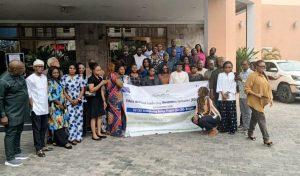
Funded by the European Union and implemented by International IDEA, the training in Port Harcourt Rivers state, brought together over 54 participants, including state CSO leaders, umbrella body representatives, and media practitioners. The programme focused on building a strong Reporting, Learning, and Accountability (RLA) framework to enhance institutional credibility, effectiveness, and sustainability at the subnational level.
Speaking during the session, Team Lead of EGLAI in Nigeria, Mr. Harry Udoh, said the initiative was designed to reposition civil society through internal reforms rather than external enforcement.
“Self-regulation is about putting in place principles, precepts, and mechanisms through which organisations discipline themselves and operate in ways that give comfort and confidence to regulators, partners, donors, rights holders, and the communities we serve,” Udoh stated.
He explained that the framework became necessary amid declining confidence in the sector, noting a growing trust deficit among stakeholders and even within civil society itself. According to him, deliberate corrective action was imperative to restore public trust.
“Confidence in the sector was eroding; self-regulation is intended to restore and deepen that trust,” he added, stressing that shared operational standards would strengthen collaboration and legitimacy across the sector.
Udoh also warned that civic space continues to face pressure from overlapping regulations, weak institutional coordination, and political interference. He maintained that strengthening internal systems through self-regulation would help CSOs preserve operational independence while improving compliance.
“Civic space at the subnational level in Nigeria is contested, uneven, and evolving. Compliance challenges faced by CSOs are real, but they are not insurmountable. A shift from adversarial regulation to collaborative accountability, anchored in credible self-regulation mechanisms, offers a sustainable pathway forward.
“By strengthening internal governance, promoting peer accountability, and engaging constructively with regulators, CSOs can protect civic space while enhancing their effectiveness and public trust.
“The capacity-building of State Champions and Subnational Network Leads is therefore a strategic investment in the future of Nigeria’s civil society,” Udoh asserted.
Programme Manager of EGLAI, Mr. Joseph Shiiwua, reinforced the need to institutionalize accountability beyond policy documents. He stressed that a robust RLA framework must translate into measurable practice across states.
“CSO self-regulation strengthens credibility, donor trust, and governance, ensuring resources are used efficiently and communities are served responsibly. It promotes ethical conduct, legal compliance, and alignment with international standards, enabling organizations to adapt to changing needs. “Through transparency, accountability, peer learning, and conflict resolution, self-regulation builds public confidence and positive reputation.
“When State Champions report honestly, learn collectively, and hold one another accountable, self-regulation becomes a living practice rather than a paper commitment,” Shiiwua said, adding that transparency reassures donors, partners, and host communities of responsible stewardship.
However, participants identified coordination challenges. Chairman of the Bayelsa Non-Governmental Organisations Forum (BANGOF), Mr. Taritein Boco, revealed that Bayelsa alone has over 2,000 registered political NGOs, raising concerns about alignment under the new framework. He advocated phased engagement and structured onboarding to ensure voluntary compliance.
Other State actors pledged to cascade the training across their respective states, ensuring wider adoption of the self-regulation framework. They committed to engaging local CSOs, strengthening reporting systems, and promoting transparency. According to them, sustained collaboration and knowledge-sharing would institutionalize accountability and deepen public trust in civil society operations.