

By Ebi Agedah
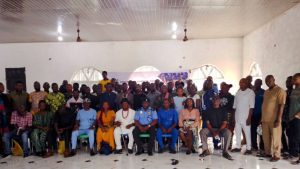 Stakeholders in the security sector have reaffirmed that community policing remains a vital strategy for effective crime prevention and public safety in Bayelsa State, stressing the importance of partnership, trust, and shared responsibility between law enforcement agencies and local communities.
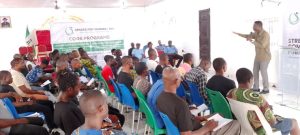
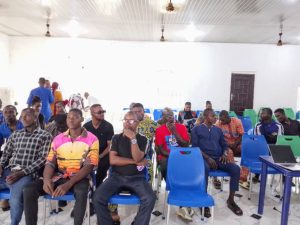
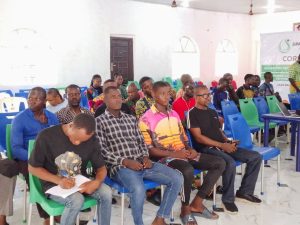 This position was underscored on Wednesday, during the Legal Empowerment and Security Training for Neighborhood Security Watch Groups organized by Spaces for Change (S4C) with support from the Open Society Foundation, where participants examined practical approaches to strengthening community-based security frameworks.
Discussions at the event focused on collaboration, open communication, and active citizen participation in identifying security challenges and developing locally driven solutions. Speakers noted that community policing, when properly implemented, fosters trust, promotes accountability, encourages timely information sharing, and enhances public confidence in policing across diverse communities.
Delivering a paper titled “The Role of the Nigerian Police in Strengthening Community Policing in Bayelsa State,” the Commissioner of Police, Bayelsa State Command, CP Daniel Iyamah, emphasized the need for closer collaboration between the Nigerian Police Force, Neighborhood Security Watch Groups, and other community-based structures to generate grassroots intelligence for the protection of lives and property.
CP Iyamah, who was represented by the Divisional Police Officer (DPO) of Amassoma Community, Bodenyefa Peter, explained that the police support community policing through leadership engagement and capacity-building programmes for community and youth security groups. According to him, such trainings are aimed at promoting lawful conduct, effective intelligence gathering, and respect for human rights.
“Security is a shared responsibility. It cannot be achieved by the police alone. Community policing promotes collaboration between the police and the people to proactively identify security challenges and prevent crime,” he said.
The DPO further urged members of the Neighborhood Security Watch Groups to operate strictly within the law and support the police by providing credible and timely information on suspicious activities, criminal hideouts, and cult-related movements within their communities.
“Without security, there can be no development. Peace attracts progress. You are partners, not substitutes for the police. Respect human rights at all times. Never assault or torture suspects, as any violation of the law will attract consequences,” he warned.
Also speaking, the Head of the Chiefs Council of Amassoma, His Royal Highness Godswill Akedesuo, advised youths to channel their energy into productive ventures that would secure their future and contribute to community development.
“There is a time for everything. When you are young, you have the strength and opportunity to build your future. Use this period wisely by getting educated or learning a skill,” he advised.
On his part, the Legal Officer of Spaces for Change, Patrick Allam, said the project was designed to ensure that all stakeholders play active roles in promoting safety and security at the community level. He emphasized that adherence to human rights standards by Neighborhood Security Watch Groups was essential to reducing conflict and criminality.
“Neighborhood Security Watch Groups are not vigilantes. There is a clear distinction. Your role is community safety. Do not allow yourselves to be used for political purposes while carrying out your duties,” he cautioned.
Earlier in her welcome address, the Executive Director of Spaces for Change, Mrs. Victoria Ibezim-Ohaeri, expressed appreciation to the Bayelsa State Police Command, traditional rulers, youth groups, and other stakeholders for their participation and sustained support toward strengthening community safety initiatives in the state.
The training reinforced the consensus that effective community policing, anchored on trust, legality, and cooperation, remains central to building safer and more resilient communities in Bayelsa State.