
By Rhoda Godwin
 In a region long defined by paradox—vast natural wealth alongside deep-rooted developmental challenges—the Niger Delta Development Commission (NDDC) has often stood at the centre of public scrutiny. Yet, under the stewardship of its Managing Director and Chief Executive Officer, Dr. Samuel Ogbuku, the narrative is gradually shifting from skepticism to cautious optimism, from abandoned promises to measurable progress.
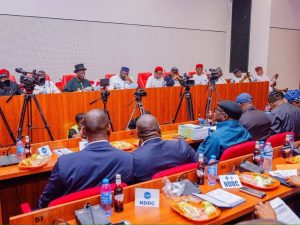
That shift was once again underscored with the presentation of the Commission’s ₦1.75 trillion 2025 Budget to the Joint Committees of the Senate and House of Representatives on the NDDC. Branded the “Budget of Consolidation,” the proposal is more than a fiscal document; it is a clear statement of intent by an administration determined to entrench reforms, deepen impact, and restore credibility to the interventionist agency.
A Leader Focused on Reform and Discipline
One of the most striking features of Dr. Ogbuku’s leadership is his emphasis on fiscal responsibility. In a bold departure from past expansionary budgets, the 2025 proposal reflects a 9 per cent reduction from the ₦1.985 trillion 2024 appropriation. At a time when many public institutions are seeking larger allocations, this deliberate cut sends a strong message: efficiency, value for money, and impact now trump sheer size.
By prioritising discipline over excess, Dr. Ogbuku has positioned the NDDC as a reform-driven institution aligned with global best practices in public finance management. This approach also resonates with the Renewed Hope Agenda of President Bola Ahmed Tinubu, under which accountability and prudent governance remain central pillars.
From Routine Interventions to Transformative Development
Beyond the numbers, the substance of the 2025 Budget reveals a deeper philosophical shift. Dr. Ogbuku’s administration has moved the Commission away from routine, fragmented interventions toward transformative, region-wide development planning. Of the total budget envelope, ₦1.631 trillion has been earmarked for critical regional projects designed to address infrastructure deficits, human capital development, and economic inclusion across the nine Niger Delta states.
The introduction of a sectoral budgeting framework further demonstrates this evolution. By organising projects around sectors rather than isolated contracts, the Commission aims to improve coordination, enhance transparency, and ensure that investments deliver tangible benefits to communities rather than paper achievements.
Restoring Confidence Through Performance
Perhaps the most compelling validation of Dr. Ogbuku’s leadership lies in the Commission’s financial performance. As of October 31, 2024, the NDDC recorded ₦1.985 trillion in actual revenues, surpassing projected targets for the fiscal year. This milestone reflects renewed confidence from stakeholders, improved compliance by contributing oil and gas companies, and stronger internal revenue and recovery mechanisms.
Such performance was almost unthinkable in previous years marked by revenue leakages, weak controls, and institutional instability. Today, strengthened financial management processes and a more transparent governance structure are redefining the Commission’s relationship with both contributors and beneficiaries.
Inclusive Leadership and Institutional Stability
Dr. Ogbuku’s leadership style also stands out for its emphasis on teamwork and institutional cohesion. Accompanied by the Executive Directors for Finance and Administration, Projects, and Corporate Services during the budget defence, he has fostered a management culture that values collaboration, professionalism, and shared responsibility.
This internal stability has translated into smoother project execution, clearer priorities, and a renewed sense of purpose within the Commission—an essential foundation for delivering long-term development outcomes.
Accountability and People-Centred Development
Welcoming the planned January 2026 oversight tour of NDDC projects by the National Assembly, Dr. Ogbuku has consistently demonstrated openness to scrutiny. Rather than viewing oversight as a threat, his administration sees it as a tool for accountability and public trust-building.
Ultimately, the focus of his leadership remains people-centred development—projects that improve livelihoods, expand access to basic services, and create sustainable economic opportunities for Niger Delta communities.
A Defining Chapter for the NDDC
As the NDDC moves into 2025, Dr. Samuel Ogbuku’s tenure is shaping up as a defining chapter in the Commission’s history. Through fiscal discipline, structural reforms, improved revenue performance, and a renewed development vision, he is steadily rewriting the narrative of an agency once plagued by controversy.
While challenges undoubtedly remain, the “Budget of Consolidation” symbolizes more than continuity; it reflects a Commission finding its footing and a leader determined to ensure that the Niger Delta’s long-awaited dividends of development finally become a lived reality for its people.