

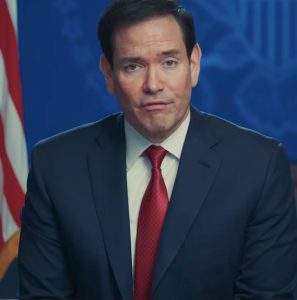
Washington, D.C. — U.S. Secretary of State Marco Rubio has outlined what he described as major foreign policy and security achievements of President Donald Trump’s administration, insisting that the White House delivered tangible results under its “America First” agenda.
Speaking during a policy briefing, Rubio said the administration’s approach prioritized peace through strength, burden-sharing among allies, and direct action against transnational threats, arguing that these policies reshaped America’s global posture.
According to Rubio, President Trump presided over the conclusion of what he called eight major foreign conflicts involving U.S. engagement, reducing America’s direct military footprint abroad while avoiding the outbreak of new large-scale wars. He described the president as a “President of Peace,” emphasizing diplomacy backed by military deterrence.
A major focus of Rubio’s remarks was the North Atlantic Treaty Organization (NATO). He credited Trump’s sustained pressure on allied nations for pushing defense spending commitments to as high as five percent of GDP among some members, a significant increase from previous levels. Rubio said this shift corrected what the administration viewed as years of imbalance, with the United States carrying a disproportionate share of collective defense costs.
On foreign assistance, Rubio said the administration undertook sweeping reforms of the U.S. Agency for International Development (USAID), arguing that aid programs were refocused to better align with U.S. strategic interests, transparency, and accountability. He maintained that the reforms were aimed at reducing waste while ensuring assistance supported stability and American security goals.
Border security also featured prominently in Rubio’s presentation. He highlighted what he described as historic agreements with regional partners to strengthen border enforcement, disrupt human trafficking networks, and manage migration flows. Rubio said these agreements reflected a more assertive diplomatic strategy that tied cooperation to concrete enforcement outcomes.
In addition, Rubio pointed to an expanded campaign against international drug cartels, which he said posed a direct threat to U.S. national security. The administration, he noted, treated cartel violence and drug trafficking as security challenges rather than solely criminal issues, increasing cooperation with foreign governments and applying tougher sanctions and law enforcement measures.
Rubio concluded that the Trump administration’s foreign policy was defined by results rather than rhetoric, saying the State Department and the White House “kept their promises to the American people.”
“Our focus was simple,” Rubio said. “Protect America’s interests, demand fairness from our partners, confront our enemies directly, and pursue peace without weakness.”
The remarks come as debates continue in Washington over America’s global role, defense spending, foreign aid, and border security—issues that remain central to U.S. politics and the country’s evolving foreign policy direction.