
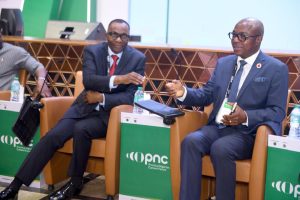
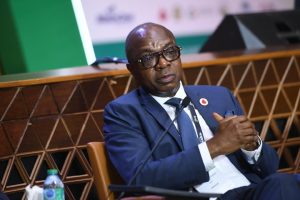
The President of the Petroleum Technology Association of Nigeria (PETAN), Engr. Wole Ogunsanya, has declared that Nigeria currently provides the most affordable oil and gas service costs on the African continent, despite persistent security and evacuation challenges affecting overall production expenses.
Speaking during a Townhall Session at the 14th Practical Nigerian Content (PNC) Conference and Exhibition held on Wednesday at the Nigerian Content Tower (NCT) in Yenagoa, Bayelsa State, Ogunsanya presented a technical breakdown of industry costs across different African jurisdictions and international markets.
He stressed the need to distinguish between capital expenditure (CAPEX) and operating expenditure (OPEX), arguing that Nigeria remains very competitive when only CAPEX is considered. He noted that what some analysts describe as “high cost of production” is mostly tied to OPEX linked to security, crude evacuation, and the activities of certain portfolio companies, rather than actual project implementation or fabrication costs.
According to him, PETAN has been conducting comparative analysis of production costs by closely examining capital and operating elements in various oil-producing countries. In Nigeria’s case, the Association has reportedly broken down cost drivers from exploration through drilling and production.
“The number one cost driver in Nigeria’s oil and gas industry operations is evacuation of crude oil and gas,” Ogunsanya stated. He explained that as a result of frequent pipeline vandalism, some operators now transport crude using vessels and barges, sometimes at an additional cost of around US$12 per barrel, including charges paid to security escorts and guards along transit routes.
Ogunsanya, who is also Chairman and Chief Executive Officer of Geoplex Drillteq Limited, highlighted that while hiring a land rig in India may cost as much as US$60,000 per day, the same rig operation could cost roughly US$30,000 a day in Nigeria. He linked this price difference to Nigeria’s strong local content structure, noting that local manufacturing, fabrication and services have reduced reliance on expensive foreign firms.
However, he criticised the prevalence of “portfolio companies”—entities that register to bid for contracts without actual equipment or capacity—saying they inflate project estimates and distort the market. He recalled that the Presidential Directive on Local Content Compliance issued on March 24, 2024, ordered such firms to be removed from procurement platforms, insisting that only companies with proven capacity should be allowed to bid.
Ogunsanya urged the Nigerian Content Development and Monitoring Board (NCDMB) and the Nigerian National Petroleum Company Limited (NNPCL) to support PETAN in benchmarking project costs across international markets. He argued that more accurate comparative data would help government agencies assess investment proposals properly, especially when major companies claim billion-dollar figures for specific outputs.
The Townhall Session, moderated by the NCDMB’s General Manager, Corporate Communications Division, Dr. Obinna Ezeobi, also discussed other issues including requirements for obtaining the Nigerian Content Equipment Certificate (NCEC) and emerging opportunities under the Board’s intervention funds.
The NCDMB Director of Capacity Building, Engr. Abayomi Bamidele, disclosed that the Board has developed new “Guidance Notes” outlining documents needed for the NCEC. He advised companies to focus on only the categories where they possess equipment, rather than applying for all eight classifications.
On financing, Director of Finance and Personnel, Mr. Uchendu Ossaowa, explained that the Nigerian Content Intervention Fund is not open to Research and Development (R&D) activities but companies can seek support through the US$50 million Nigerian Content Research and Development Fund and NCDMB-sponsored innovation hackathons.
Delegates concluded the 14th edition of the conference with a guided facility tour focused on specialised electrical services and solutions.