

 By Amara Agha, Abakaliki
The Ebonyi State Government has announced plans to decentralise the Ministry of Justice across the three senatorial zones of the state as part of ongoing reforms to enhance access to justice and strengthen judicial efficiency.
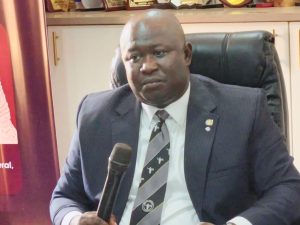
Attorney General and Commissioner for Justice, Dr. Ben Odoh, disclosed this in Abakaliki during Civic Catalyst: HAG Open Forum 2.0, where he highlighted key achievements and outlined the ministry’s future direction.
Odoh noted that the decentralization move aligns with the state’s broader legal reform framework—the People’s Charter of Justice—aimed at promoting inclusiveness, efficiency, and citizen participation in justice delivery.
He revealed that the ministry’s prison decongestion initiative has so far led to the release of 328 inmates through prerogative of mercy and other components of the state’s strategic legal interventions.
The Commissioner also highlighted major strides in modernising the ministry, stating that he inherited an analogue justice system but has since initiated digital transformation with the support of Governor Francis Nwifuru and development partners. According to him, the ministry has procured and installed Speech-to-Text machines to expedite court proceedings and facilitated the establishment of six virtual courts—one at the Chief Magistrate’s Court and five at the High Court—along with four virtual hearing centres at the Correctional Centre.
Odoh further disclosed the establishment of a Multi-Door Courthouse, the State Citizens’ Mediation Centre, and the Office of the Public Defender, which collectively promote mediation, arbitration, conciliation, and pro bono legal services for indigent citizens. Over 20 lawyers have been trained as chartered arbitrators to drive the state’s restorative justice agenda, he added.
He said the Mediation Centre has significantly reduced frivolous litigation, while the Public Defender’s Office has complemented the Legal Aid Council in providing free legal services to the less privileged.
“We have assisted the Executive in drafting many implementable bills, 13 of which have been signed into law, including the law that reviewed the monetary jurisdiction of the Chief Magistrate’s Court from ₦500,000 to ₦5 million,” he said.
Odoh also revealed that the state is working with LexisNexis to codify its laws for the first time since 2009.
While acknowledging challenges such as funding constraints and language barriers, the Attorney General said the ministry will, by 2026, intensify the implementation of criminal justice reforms, expand citizens’ mediation centres across all 13 LGAs, and collaborate with the Ministry of Women Affairs to strengthen juvenile justice services.
Initiator of the forum and Technical Assistant to the Commissioner, Oluchi Esther Nwite, said the event was designed to promote citizen engagement, transparency, and accountability. She added that it also provided an opportunity for participants to share lessons and contribute to the Charter of Justice, a justice-for-all pillar of Governor Nwifuru’s People’s Charter of Needs agenda.