

As Nigeria navigates a complex global energy landscape, attention is shifting to the next generation—young people who must be equipped, empowered, and strategically positioned to sustain the country’s oil and gas sector. That focus was unmistakable at the 2025 Practical Nigerian Content (PNC) Conference held in Yenagoa, Bayelsa State, where policymakers, industry leaders, and experts convened to examine the theme: “Building Youth Capacity, Securing Investments, Sustaining Growth in the Oil and Gas Industry.”
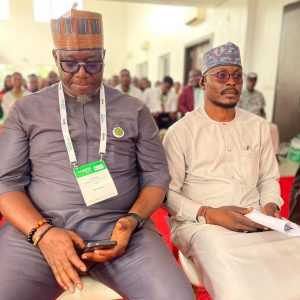

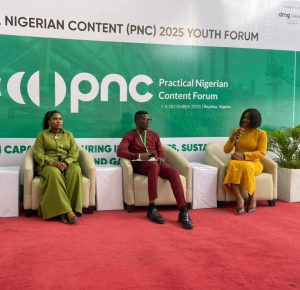
Beyond the main conference, the Nigerian Content Development and Monitoring Board (NCDMB) deepened its engagement with young Nigerians at a well-attended Youth Forum hosted at the Harold Dappa-Biriye Hall, Onopa. Drawn from universities, skills centres, local communities, and emerging enterprises, the youth participants were challenged to develop the capabilities that would enable them to play active roles in securing the nation’s energy future.
What emerged across both platforms was a unified message: Nigeria’s energy prosperity can only be sustained if the youth embrace skills, discipline, innovation, and long-term thinking.
—
A Spotlight on Youth at the Sidelines of PNC2025
The NCDMB Youth Forum, held on the sidelines of #PNC2025, served as a more intimate platform for young people to receive actionable guidance from regulators and industry practitioners. Representing the Executive Secretary of the NCDMB, Engr. Felix Omashola Ogbe (FNSE, FIPS), Mr. Teddy Bai—Supervisor of Government Relations—affirmed the Board’s strategic approach to youth development.
He emphasised that youth empowerment is not an optional social programme but a foundational requirement for sustainable sectoral growth. According to him, the Board’s interventions—ranging from education to field readiness, entrepreneurship, and innovation—are designed to ensure that Nigerian youths are not spectators बल्कि actors in the country’s energy transformation.
The Youth Forum featured sessions on:
The strategic role of young people in attracting and retaining investments
The importance of registering on the NOGIC-JQS platform—a mandatory database for Nigerians seeking opportunities in the oil and gas value chain
Upcoming training opportunities, including technical skill development and entrepreneurship support
Motivational and career guidance aimed at helping participants align their talents with industry needs
An interactive Q&A session allowed youths to engage directly with experts, many of whom stressed that competence, discipline, and digital literacy are becoming the new pillars of employability.
Participants described the forum as timely and powerful—an initiative that aligns youth aspirations with national energy objectives while providing clear pathways for participation.
—
Rethinking the Youth Role in Securing Investments
The tone for the wider conference was set by keynote speaker M. B. Seiyefa, mni, Chancellor and Chairman of Council at Niger Delta University. In a deliberately reflective and thought-provoking address, Seiyefa explored the delicate balance between security and development, drawing on the famous words of former U.S. Defence Secretary Robert McNamara:
> “Security is development. Without development, there can be no security.”
He explained that sustainable development is impossible in environments marked by sabotage, instability, or disruptions to critical infrastructure—challenges that have historically plagued parts of the Niger Delta.
“Your future is intrinsically tied to the stable and sustained operation of the energy resources in your communities,” he told the youths. “Protect these investments, and they will, in turn, create the opportunities that will help you achieve your life potentials.”
He called for a fundamental mindset shift, especially among Bayelsa youths. The long-held belief that oil wealth guarantees government jobs or easy employment in oil companies has become outdated, he said. Today, global trends demand entrepreneurship, innovation, and skills that align with industry needs.
Universities worldwide, he noted, are being pushed to redesign curricula to bridge academic learning with practical, market-driven skills. Nigerian institutions must follow suit—and young people must be ready to adapt.
—
Unlocking Opportunities Through Skills and Mindset Transformation
Seiyefa pointed to large-scale projects underway in the Niger Delta, including the Brass Fertilizer Project and the Brass Free Oil and Gas Zone, both expected to generate thousands of jobs.
“But opportunities do not automatically translate into employment,” he warned. “They must be matched with adequate preparation, discipline, and the right mindset.”
He credited developments such as the amnesty programme and the Petroleum Industry Act (PIA) for improving investor confidence but stressed that sustaining that momentum requires vigilance from both government and host communities.
—
Bayelsa Government: Youth Must Be Deliberate About Growth
Bayelsa State Governor, Senator Douye Diri, represented by the Director-General of the Center for Youth Development, Comrade Robert Igali, reaffirmed the administration’s commitment to fostering youth empowerment.
“If one youth is developed,” the governor said, “we are happy as a state.”
Diri highlighted the state’s investments in infrastructure and security—investments he said were already drawing attention from new investors. The imminent kick-off of the Gas Turbine project, he added, will catalyse industrial growth across the state.
He urged young people to be intentional about learning, unlearning, building new networks, and avoiding actions that could de-market Bayelsa.
“Enough of talking. We must be practical and proactive. Take advantage of opportunities from the Prosperity Government, our partners, and multinational companies.”
—
NCDMB Achieves 61% Local Content, Unveils $100m Fund
One of the conference’s most significant announcements came from NCDMB Executive Secretary Engr. Felix Ogbe, who revealed that Nigeria has achieved 61% local content, up from 56%.
With a 10-year roadmap targeting 70% by 2027, he said the improvement reflects better industry partnerships and more robust national capacity.
To deepen Nigerian participation, Ogbe announced a US$100 million Nigerian Content Equity Investment Fund, to be managed by the Bank of Industry. The fund is expected to support indigenous service companies, manufacturers, and innovators.
Further achievements include:
The launch of the Nigerian Content Academy
Advancements on the Oloibiri Museum and Research Centre
Expansion of human capital development programs
Notably, the Oil and Gas Field Readiness Training Program, focused on the top 10 skills in high demand, has already received over 11,000 applications, signalling growing youth enthusiasm.
—
Federal Government: Investor Confidence Is Returning
Minister of State for Petroleum Resources (Oil), Senator Heineken Lokpobiri, told participants that the Federal Government has made progress in persuading previously exited international oil companies to return to Nigeria.
He cautioned, however, that local content rules must be implemented with balance to prevent disruptions in operations or project timelines.
Similarly, Minister of State for Petroleum Resources (Gas), Hon. Ekperikpe Ekpoh, reaffirmed the government’s determination to ensure that Nigerians benefit directly from the country’s enormous gas potential.
—
Legislators Also Weigh In
Lawmakers including Senator Joel Onowakpor-Thomas, Chairman of the Senate Committee on Local Content, and Hon. Boma Goodhead, Chair of the House Committee on Local Content, applauded efforts to deepen Nigerian capacity in the sector. They urged continuous collaboration between policymakers, regulators, and communities to consolidate gains.
—
A Turning Point for Niger Delta Youth
From the main conference halls to the breakout rooms of the Youth Forum, the message was unmistakable: Nigeria’s oil and gas industry cannot move forward without young people who are prepared, skilled, and disciplined.
The 2025 PNC Conference marked more than a technical gathering—it was a transformative dialogue focused squarely on the future. Youth were not treated as passive observers but as active stakeholders in Nigeria’s energy destiny.
In a region historically shaped by struggle and environmental challenges, a new narrative is emerging—one built on capacity, innovation, stability, and responsibility.
If the energy, enthusiasm, and commitments displayed in Yenagoa translate into concrete action, the Niger Delta’s youth could become not just beneficiaries of Nigeria’s oil wealth, but architects of a diversified, sustainable economic future..