

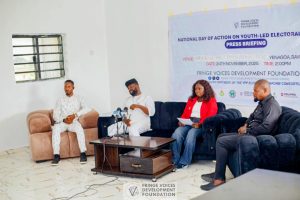
Youth-led civil society organisations have intensified calls for urgent passage of major electoral and constitutional amendments as the National Assembly prepares to vote on key reform proposals already advancing through the review process.
Speaking at a joint press briefing at the National youth council office, Yenagoa, to mark the National Day of Action on Youth-Led Electoral Reforms, the Fringe Voices Development Foundation—South-South partner in the Youth Political Participation (YPP) Electoral Reform Consortium—joined organisations across Nigeria’s six geopolitical zones in demanding swift legislative action on reforms aimed at strengthening transparency, accountability, and youth inclusion in electoral governance.
The YPP Electoral Reform Consortium, coordinated by the Kimpact Development Initiative (KDI) and supported by the Canada Fund for Local Initiatives (CFLI), includes partners such as JESZ Development Foundation (North West), Media Advocacy Promotion for Development Initiative (South West), Child Protection and Peer Learning Initiative (North East), and Better Community Life Initiative (South East).
Speaking during the briefing, Executive Director of Fringe Voices Development Initiative, Tare Maureen, said young Nigerians have consistently expressed concerns about manipulation, delayed justice, and weak institutional safeguards that undermine trust in elections. She stressed that the ongoing constitutional review offers lawmakers the opportunity to “reset the credibility of Nigeria’s electoral process.”
Dr. Inebaraton Preye, Secretary of the Bayelsa state Peace Architecture (SPA), and a key voice at the briefing, highlighted the youth bloc’s central reform priorities currently before the National Assembly. These include:
1. A transparent and merit-based process for appointing INEC leadership. The group called for amendments to Sections 153 and 154 of the Constitution to remove full presidential discretion in the appointment of INEC Chairpersons, National Commissioners, and Resident Electoral Commissioners. They recommended a non-partisan selection committee drawn from reputable national institutions to strengthen independence and public trust.
2. Timely resolution of pre-election and post-election cases.
Stakeholders urged the amendment of Section 285 to ensure all pre-election matters are concluded before election day and post-election cases determined before inauguration. According to Dr. Preye, prolonged litigation “distorts fairness and pressures both the judiciary and the electoral environment.”
3. Establishment of the Electoral Offences Commission.
The group renewed calls for the passage of an enabling Act to create a dedicated body responsible for investigating and prosecuting electoral offences. They argued that persistent violence, vote-buying, and intimidation require an institution empowered to ensure accountability and deter impunity.
Additionally, the consortium urged lawmakers to consider amendments to Section 225 of the Constitution, stressing the need for stronger regulations on political party financing and operations to improve internal party democracy and protect the integrity of the electoral process.
Also speaking at the event, Mr. Kokoriko Ebikibina Raphael, President of the National Youth Council of Nigeria (NYCN), Bayelsa State advocated for an independent investigative framework and commission capable of addressing electoral infractions without political interference. He emphasized that “youth are not just stakeholders but frontline defenders of democracy, and their demands must translate into legislative action.”
The group argued that the reforms would not only improve electoral integrity but also reduce political tension, limit disputes, and enhance public confidence in elected officials. They also noted that lawmakers who support these reforms stand to strengthen their democratic credentials and deepen constituent trust.
Fringe Voices and other consortium members urged citizens, civil society organisations, media professionals, and community influencers to intensify public pressure on lawmakers as the vote draws near.
“These reforms deserve passage, not delay,” Tare Maureen stated. “Nigeria’s democratic future—and the trust of millions of young people—depends on the decisions made at this defining moment.”