

Ebizimo Agedah
The urgent call for government intervention in promoting clean and renewable energy once again took center stage as members of various non-governmental organizations (NGOs) in Bayelsa State joined voices with the Lilbeckking Development Foundation (LIBEDEF) to demand a national policy shift toward solar and other renewable energy sources.
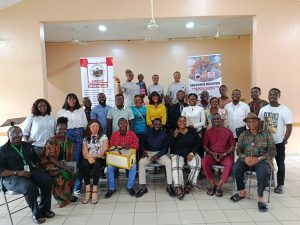
At a stakeholders’ meeting themed “Youth Action for Clean Energy” convened in Yenagoa by LIBEDEF, in partnership with Urban Movement Innovation (UMI) and Field Front Development Partners Ltd., participants stressed the need for the government to subsidize solar energy to make it affordable and accessible to all Nigerians.

The meeting, which brought together youth leaders, civil society actors, and environmental advocates, featured active participation from several Bayelsa-based NGOs, including the Family Welfare Foundation, Albinism Association of Nigeria (Bayelsa State Chapter), Eunice Nnachi Women Advocacy Foundation (ENWAF), Fringe Voices Development Foundation, Voice of the Ijaw Girl Child, and the FACE Initiative.
In his keynote address, Executive Director of LIBEDEF, Mr. Destiny Aigbokhae, said Nigeria’s overdependence on fossil fuels was damaging the environment and public health. He maintained that clean energy remains the most sustainable pathway to economic growth and environmental protection.
“The government must take responsibility by subsidizing solar energy and other renewable options. Solar energy is clean, sustainable, and healthier for the environment. But without government support, ordinary citizens cannot afford it,” Aigbokhae stated.
He added that the transition to clean energy would not only create green jobs but also reduce carbon emissions and improve health outcomes for Nigerians. “If we destroy this planet, we don’t have another one to live on,” he warned.
Also speaking, Project Coordinator of LIBEDEF, Ms. Lucy Obabueki, outlined the foundation’s vision to empower youths and communities through renewable energy education, healthcare access, and environmental sustainability. “Our work includes tree planting, solarizing health facilities, training youths on solar installation, and providing skills development for young people and out-of-school children,” she noted.
In her remarks, Lady Eunice Nnachi, Executive Director of Women Organized for Mentorship and Advocacy Network (WOMAN), applauded LIBEDEF’s initiative, describing the awareness campaign as timely and transformative. She urged both government and citizens to act decisively in favor of renewable energy.
“The benefits of clean energy cannot be overemphasized,” Nnachi said. “The ozone layer is depleting, the air we breathe is becoming unsafe, and yet, solar energy remains expensive for many. We appeal to the government to subsidize clean energy solutions so they can be affordable to everyone.”
Also, the Executive Director of the Family Welfare Foundation, Mr. Dauseye Torki and FACE Initiative, Mr Inatimi Odio highlighted that renewable energy access was not just an environmental issue but also a social justice concern. They noted that cleaner energy could help power rural clinics, schools, and small businesses, improving livelihoods across communities.
Mr Solomon Simon representing Eunice Nnachi Women Advocacy Foundation (ENWAF), and also representing Voice of the Ijaw Girl Child, Mrs Timipre Tobi emphasized that women and children suffer the most from the effects of environmental degradation caused by fossil fuels. They called for deliberate government policies that promote affordable solar solutions and empower rural women to adopt clean energy practices.
Speaking on behalf of the Fringe Voices Development Foundation, Tare Maureen, a participant called for increased investment in youth-led renewable energy innovation, arguing that “young people are the key drivers of the clean energy future.”
The meeting concluded with a collective resolution by the participating NGOs, urging federal and state governments to prioritize renewable energy investments, introduce subsidies for solar equipment, and engage communities in sustainable development efforts to safeguard the environment and future generations.