
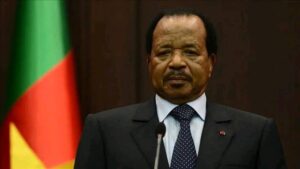
Cameroon’s Constitutional Council on Monday declared President Paul Biya, aged 92, winner of the country’s presidential election, securing yet another term in office and extending his more than four decades in power.
According to official results announced in Yaoundé, Biya of the Cameroon People’s Democratic Movement (CPDM) garnered 53.66 percent of the votes, defeating his closest rival Issa Tchiroma Bakary, who polled 35.19 percent. The council said the election results were based on tallies from all 10 regions, despite reported delays and alleged irregularities in some areas.
With this victory, Biya will now serve his eighth consecutive term in office, which will run until 2032, cementing his status as one of the world’s longest-serving leaders. He first became president in 1982, following the resignation of Cameroon’s first president, Ahmadou Ahidjo.
Celebrations erupted among supporters of the ruling party in the capital city, Yaoundé, where hundreds took to the streets waving flags and chanting Biya’s name. “Our father has done it again,” said Marie Nguem, a long-time party loyalist. “He is a symbol of peace and stability.”
However, opposition groups and civil society organizations have rejected the results, alleging vote rigging, intimidation, and manipulation of the counting process. Several protesters were reportedly dispersed by security forces in the city of Douala, while clashes were also recorded in the North-West and South-West regions.
Opposition leader Issa Tchiroma Bakary condemned the announcement, describing it as “a daylight robbery of the people’s will.” He vowed to challenge the outcome through legal and international channels, calling for the African Union and United Nations to intervene.
International observers, including the European Union’s election monitoring team, have expressed concerns over transparency, citing reports of voter suppression and restricted access to polling stations in conflict-affected zones.
Despite the controversy, Biya’s government has assured Cameroonians that the election was “free, fair, and credible.” In his post-election speech, Biya urged unity and calm, promising to continue his “mission of peace, progress, and national development.”
At 92, Biya remains the world’s oldest serving head of state, a title that has fueled debate about leadership longevity and democratic transitions in Africa. As he prepares for yet another term, the nation remains divided—between those who hail him as a stabilizing force and those who see him as a symbol of stagnation.