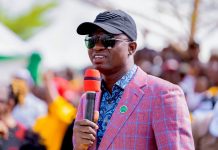


The atmosphere outside the Kuje Magistrate Court in Abuja turned tense on Friday after security operatives re-arrested human rights activist and publisher, Omoyele Sowore, shortly after he and twelve other activists were granted bail. The activists had been arraigned for participating in the #FreeNnamdiKanuNow protest, demanding the release of the detained leader of the Indigenous People of Biafra (IPOB), Nnamdi Kanu.
For Sowore and his co-defendants, the court’s decision to grant bail seemed a sign of relief after several days in detention. However, that relief was short-lived. Moments after stepping out of the courtroom, armed police officers surrounded Sowore, dragging him into a waiting vehicle despite the bail order just issued by Magistrate Abubakar Umar Sai’id. Eyewitnesses described the scene as chaotic, with officers forcefully overpowering the activist as he resisted attempts to whisk him away without explanation.
“They didn’t show any warrant or court order,” said a witness who pleaded anonymity. “Sowore kept asking why he was being re-arrested, but the police refused to answer. They just grabbed him and drove off.”
According to reports, Sowore was later transported to the Kuje Correctional Centre, with police officers claiming to be acting on a “remand order.” However, no such document was presented or confirmed in court, raising questions about the legality of his detention.
Earlier in the day, Magistrate Abubakar Umar Sai’id had granted bail to Sowore and 13 others arrested during the October 20 protest. Among those freed were Aloy Ejimakor, a member of Nnamdi Kanu’s legal team; Prince Emmanuel Kanu, the IPOB leader’s brother; and ten other activists. They were each granted bail in the sum of ₦500,000 with two sureties in like sum.
The defendants had been arraigned on two counts of unlawful assembly and disturbance of public peace. The prosecution alleged that their protest, held near the Federal High Court in Abuja, disrupted public order and posed a security threat. All defendants pleaded not guilty.
As part of their bail conditions, the court directed them to surrender their international passports, provide a verified National Identification Number (NIN), and submit a three-year tax clearance certificate. The ruling, delivered in open court, was hailed by human rights groups as a victory for civic freedoms.
However, the re-arrest of Sowore moments later has sparked widespread condemnation. Activists, lawyers, and civil society groups have described the police action as “an assault on the rule of law” and “a calculated attempt to silence dissent.”
“This is an alarming trend where law enforcement agencies defy court orders with impunity,” said a human rights lawyer in Abuja. “If the court grants bail and the police still detain the same individual, it completely erodes public trust in the justice system.”
Sowore, a former presidential candidate and publisher of Sahara Reporters, has been a vocal critic of government policies and an advocate for democratic reforms. His involvement in the #FreeNnamdiKanuNow movement, supporters say, is an extension of his long-standing activism for human rights and freedom of expression.
His arrest and continued detention have reignited debates over Nigeria’s handling of peaceful protests and the growing tension surrounding Nnamdi Kanu’s continued incarceration. Kanu has been in