

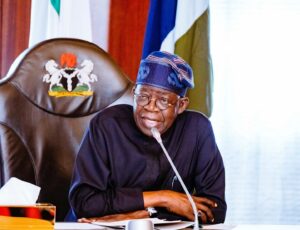
In a major shake-up of Nigeria’s security architecture, President Bola Ahmed Tinubu has approved sweeping changes in the hierarchy of the Armed Forces, appointing new Service Chiefs in what observers describe as both a strategic security move and a subtle response to rising speculation of discontent within the military ranks.
Announcing the changes from the State House, Abuja, on Thursday, the Presidency confirmed that General Olufemi Oluyede has been appointed the new Chief of Defence Staff, replacing General Christopher Musa.
Major-General W. Shaibu now assumes office as Chief of Army Staff, Air Vice Marshal S.K. Aneke becomes the new Chief of Air Staff, while Rear Admiral I. Abbas has been named Chief of Naval Staff. Major-General E.A.P. Undiendeye, however, retains his position as Chief of Defence Intelligence.
According to the official statement signed by Presidential Spokesman, Chief Ajuri Ngelale, the reorganisation is part of ongoing efforts to “strengthen Nigeria’s national security architecture and enhance operational efficiency across the services.” The President, who serves as Commander-in-Chief of the Armed Forces, expressed profound appreciation to the outgoing Service Chiefs for their “patriotic service and dedicated leadership.”
However, the timing of the reshuffle has sparked widespread discussion across political and security circles, coming on the heels of unverified reports of an alleged coup attempt by some disgruntled officers. While the Presidency has not confirmed any coup plot, sources within the defence establishment suggest that recent intelligence pointed to growing unease among middle-ranking officers over welfare issues and operational pressures in conflict zones.
A senior security analyst, Dr. Michael Agbaje, said recently that, the move could be interpreted as a preventive step. “This is a standard presidential strategy—when there are signs of friction or divided loyalties within the military leadership, you refresh the command structure. It reasserts control and ensures loyalty to the Commander-in-Chief,” he said.
Nigeria, Africa’s most populous democracy, has a long and complex history with military intervention in politics, with the last coup attempt occurring in the 1990s before the return to civilian rule in 1999. In recent years, however, the nation has witnessed mounting security challenges—from banditry and terrorism in the North to separatist agitations and rising insecurity in the South