

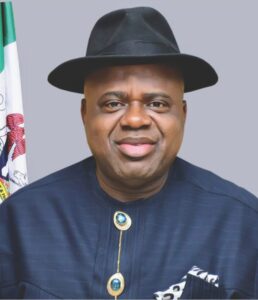
 As Bayelsa State marked its 29th anniversary on October 1, 2025, alongside Nigeria’s 65th Independence celebration, Governor Douye Diri’s statewide broadcast carried a clear and hopeful message: a new dawn of power sufficiency, infrastructure growth, and renewed optimism for the state. Central to that optimism is the recent procurement of eight 60-megawatt gas turbines, a milestone project the governor believes could transform the state’s economy, create jobs, and guarantee uninterrupted electricity supply.
For a state historically dependent on oil and gas revenues yet plagued by inadequate power supply, the arrival of the turbines at Elebele in Ogbia Local Government Area is a development that many Bayelsans are following closely.
Lighting the Path: The 60MW Gas Turbines
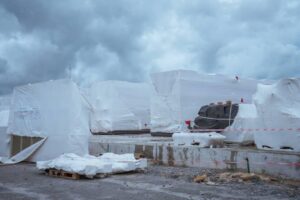
Governor Diri announced during his anniversary broadcast that six of the eight gas turbines had arrived in Bayelsa, with the remaining two expected shortly. The turbines, which represent the latest in modern technology, will form the nucleus of the Bayelsa Independent Power Plant (IPP).
“This is a milestone that brings us much closer to reliable, round-the-clock power in our state,” Diri declared. “It will reduce household expenses, attract investment, create jobs and stimulate economic growth.”
The turbines, once fired up by December, are projected to supply 24-hour electricity to Yenagoa and its environs. For a state capital where generators often outnumber streetlights, the promise of uninterrupted power supply is nothing short of revolutionary.
But the governor was quick to clarify one thing: the power generated will not be free. Consumption will be metered, and households and businesses will pay as they consume.
“To maintain these equipment and the gas to fire them, even though it is on our soil, we will spend money to procure it from the company,” Diri explained. “So it is not free. For there to be constant electricity everybody must pay for it.”
READ: Bayelsa Celebrates Historic Conferment of SAN Rank on Zimughan, Agedah
The state government has already signed a Memorandum of Understanding (MoU) with Jampur Group, its technical partner, to establish a customised metering production plant in Bayelsa. This ensures that consumers will be properly billed, while creating local jobs in meter production and installation.
Why Power Matters
For years, Nigeria’s power sector has been a paradox of promise and disappointment. Despite being Africa’s largest economy, the country generates far less power per capita than its peers. Frequent blackouts have hindered industrialisation, discouraged investors, and made life harder for ordinary citizens.
In Bayelsa, the irony is sharper: sitting atop some of the country’s richest gas deposits yet unable to power its homes and industries. With the new turbines, Diri hopes to break this cycle.
According to experts, reliable power could slash household energy costs by reducing dependence on diesel and petrol generators. Small and medium enterprises (SMEs), often crippled by the high cost of self-powering, could flourish. Investors seeking a stable base in the Niger Delta would have one less worry.
“This project is a dream come true,” said Bayelsa’s Commissioner for Power, Kharin Komuko. “When the governor first spoke about it, critics doubted it. Today, the arrival of the turbines proves his commitment to delivering prosperity.”
Engr. Olice Kemenanabo, Managing Director of the Bayelsa State Electricity Company, added that the partnership with the Port Harcourt Electricity Distribution Company (PHEDC) would ensure smooth integration into the national grid while avoiding legal tussles. The PHEDC’s network of over 400 transformers across the state is expected to serve as the backbone for distribution.
Beyond Power: Building a Modern Bayelsa
The turbines are only one part of Diri’s vision for Bayelsa’s future. In his anniversary broadcast, he highlighted several landmark projects under construction.
The Nine-Storey Secretariat
At Ovom in Yenagoa, work is advancing on a nine-storey secretariat complex for civil servants. The facility, designed to provide modern office space, will centralise administrative functions that are currently scattered across the city.
“The complex will provide efficient administrative space for public servants and the people they serve,” Diri said. It also symbolises his administration’s push to modernise governance infrastructure in line with global standards.
The 25,000-Capacity Stadium
At Igbogene, construction continues on a 25,000-capacity Olympic-standard stadium. For a state known for producing top athletes, particularly in wrestling and football, the stadium is expected to boost youth development and put Bayelsa on the sporting map nationally and internationally.
“It is not just about sports,” Diri emphasised. “This facility will inspire our young people and showcase Bayelsa to the world.”
ALSO READ: Bayelsa’s Twin Battles: Oil Pollution Justice and Gulf of Guinea Prosperity
Education: The Bedrock of Growth
Diri also used his speech to celebrate gains in the education sector. Bayelsa recently ranked among the top five states in Nigeria in NECO results, a marked improvement from years past.
“Our schools are improving,” he said. “To deepen pragmatic education, we have established science, technical and vocational colleges in every local government area.”
Completed and functional colleges in Ayamasa, Ofoni, Swali, Sampou, and Opume are already operational, while others in Brass, Igbeta-Ewoma, and Oporoma are nearing completion. These institutions are designed to equip young Bayelsans with skills that match the demands of a modern economy, from engineering to entrepreneurship.
Paying the Price for Progress
While optimism runs high, some Bayelsans have raised concerns about the affordability of the new power supply. With poverty levels still significant, the introduction of a pay-as-you-consume model could exclude low-income households if tariffs are not carefully managed.
Experts argue that the success of the project will depend not only on technical execution but also on transparent billing, consumer education, and subsidised access for the poorest.
Nevertheless, the consensus is that sustainable power must be paid for. As one observer noted, “The days of thinking electricity should be free are gone. If Bayelsa can power its homes and industries reliably, then the sacrifice will be worth it.”
A Call for Reflection and Unity
As Bayelsa enters its 30th year of statehood, Diri urged citizens to reflect on their journey of self-determination.
“The road has not always been smooth,” he admitted. “But as Bayelsans, we have spent almost three decades making our own decisions, setting our own course and running our own race. That capacity is a cause for celebration and a responsibility we must discharge with wisdom and humility.”
For him, the narrative about Bayelsa is shifting. Once synonymous with militancy and environmental degradation, the state now seeks to be a hub of prosperity, education, and innovation.
READ ALSO: Bayelsa CSOs Step Up: How Civil Society is Driving Transparency in Asset Recovery
Looking Ahead
The true test of the gas turbine project and other infrastructure lies ahead. If Diri can deliver uninterrupted power by the end of 2025, it could become the defining legacy of his administration. Reliable electricity would transform the economy, attract investment, and improve the quality of life for millions.
But success will require more than technical expertise. It will demand transparency, accountability, and continuous dialogue with the people. After all, prosperity is only assured when citizens feel included in the dividends of development.
For now, Bayelsans wait — with cautious optimism — as the turbines at Elebele prepare to roar into life, lighting up not just homes and businesses, but the collective hope of a state determined to shape its own future.